Friday, April 13, 2012

Lists

The top ten films of all time? The best films? The most popular films? The films you watch over and over again? How do you make those determinations? When people ask my favorite films, despite the fact that I consider myself something of a film buff, and I've seen a lot of movies and spent plenty of time seeking out classics, and I can name both American directors who wore eyepatches, and I really do think Citizen Kane is amazing, I am reluctant to offer an answer. It would take a lot of time to compose a list of my "favorite" films. What do I recommend? It depends on you. If you've seen a lot of movies, including the complete Ozu, I might suggest something different than if you've never even seen The Wizard of Oz.

Roger Ebert has his own take on lists:

Long-suffering readers will have read many times about my dislike of lists, especially lists of the best or worst movies in this or that category. For years they had value only in the minds of feature editors fretting that their movie critics had too much free time. ("For Thursday's food section, can you list the 10 funniest movies about pumpkin pie?") Now their value has shot way up with the use of slide shows, a diabolical time-waster designed to boost a web site's page visits.

I'm with him there. Lord, save us from slide shows! I've seldom made it to the end of one, even if I like the content, because I don't want to reward the greed of the webmaster who wants to artificially increase the number of "eyeballs." I mean, really. If Grinwout's touts a slideshow, it is an unusual event (and more often than not, slides on a page rather than multiple pages). I just don't like playing their silly game.

Ebert's remarks are from The best damned film list of them all, which is a good starting point for the business at hand, the top ten movies of all time. Sight & Sound publishes this list every decade, and Ebert is about to embark on submitting his picks for the 2012 list. He talks about the whys and wherefores, and that's interesting enough. But then you can go to S&S and take a look at all the different lists from 2002. This is the sort of thing to do with a group, because it will give you something to fight about.

Thursday, April 12, 2012

The Toy Fair

Illustrator/blogger Lisa Hanawalt and her boyfriend masquerade as chia seed employees to visit the Toy Fair at NYC's Javits Center, which is sort of an architectural Death Valley, without all the fun spots. It's the perfect place for a manufacturers' or any kind of sales convention. The toy show, of course, is absolutely limited to the trade—no kids running around here, thank you very much, despite what they happen to be offering. This is serious business, and Hanawalt is the perfect guide:

Do you remember your favorite toys as a child? And maybe you wondered why adults didn't seem as enchanted with your toys as you were? I used to swear I'd never lose interest in my figurines and dolls, I feared it would mean losing my entire sense of self. But of course I grew older and started leaving those beloved things behind. I can pick up a Breyer horse, admire the smooth plastic and artful details, but … that's it. I'm not going to sit on the floor with it for hours, making it talk to other toys, acting out my latest conflicts and fantasies, forming pretend relationships. I wish I could enjoy toys on that level again.

Sigh...

Breyer horses are at the show. And Legos. And this poor guy below selling bobble heads. Take the trip: The Toy Fair (via).

The guy who played Data

Whatever happened to Brent Spiner:


Fresh Hell is one of those web series that are popping up nowadays, and having just watched a couple of episodes, we can report that this is goofy, funny stuff. Whether or not the web is the source of all of tomorrow's entertainment, as some would suggest, remains to be seen, but there's good material out there beyond just clips. Vice.com (there's a URL for you) interviewed Spinter recently:

The part and the show was a gift and I am eternally grateful. I’m delighted that other people have opinions and affection for the character. The only thing that bothers me—and it happens all the time—is when people see me and shout, “DATA! DATA”! I’m fine with people recognizing me. I just wish they shouted, “Guy who played Data”!

Check out Off Hollywood - Brent Spiner, and follow his show, Fresh Hell.

Thomas Kinkade

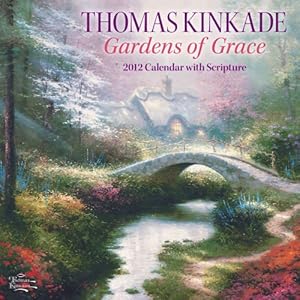
There's a Thomas Kinkade store in the mall next door to my office. When you walk past it, you see a mixture of sports paintings, simulations of Disney parks and movies, and cozy cottages. All of these images are of a piece. They represent something we long for, presented in an idealized way that takes the desirable and makes it even more desirable. Gilding the lily, you might say, almost literally, given Kinkade's use of light effects in his work. You can purchase his work at all levels of price: there's something for everyone. His success, at least in terms of popularity, was undeniable.

When Kinkade died last week, the knives were immediately drawn. Art critics have, almost universally, panned his worked. Then again, plenty of these same art critics think the world of sharks floating in formaldehyde, so I don't exactly know how good a barometer they might be. That's the problem with art. The gatekeepers are this exclusive group of critics and gallery owners who explain to the rest of us what we should like and dislike. Well, that's all well and good, and I appreciate learning from an expert where a given piece might fit in history, but I'll be the one who decides if I like it. (There's a great play on the old joke in a New Yorker cartoon of someone carefully studying a painting: "He knows a lot about art but he doesn't know what he likes.")

The point is, say what you will about Kinkade, a lot of people loved his stuff:

His images are basically devoid of emotional darkness. Whether you find that cloying or comforting is “the essential divide between people who respond to his work and people who don’t,” [art historian Alexis] Boylan says. “It all comes down to: What part of yourself do you want to see reflected when you look at a work of art?...‘Soothing’ is not how a lot of people would define a lot of the art you see in museums and galleries, but historically, a lot of art has been produced with the sole purpose of being beautiful and comforting, and giving people pleasure.”

Like him or not, he's a force to be reckoned with. So is the question of the purpose of art. Read Why Thomas Kinkade’s Art Touched So Many.

Tiny Tim

One has to admit that Herbert Khaury, AKA Tiny Tim, is best referred to as an acquired taste. He seemed to come out of nowhere in the Sixties, and he seemed to be quite genuine. The song below was his biggest hit, but his most popular moment was when he was married, live, on the Tonight Show. It was the real thing; Johnny Carson and Ed McMahon stood off to the side, just like any wedding guests. (Sadly, the marriage did not last.)


TT was born on this date in 1932, and died (almost literally while playing the ukulele onstage) in 1996.

There's more TT on YouTube. Most of it is about the same. As we said, he was, at best, an acquired taste. But one has to point out that as offbeat as he was, he had a love of old music at a time when old music was almost going out of business. He had the courage of his convictions, in other words. He just happened to have unique convictions.

Wednesday, April 11, 2012

The Titanic


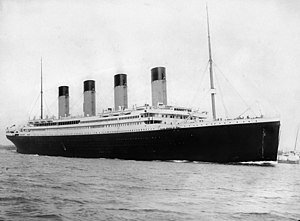
The disaster has become so invested with mythical status—it’s been said that the name Titanic is the third most widely recognized word in the world, after “God” and “Coca-Cola”—that it almost seems to be a constant, an event that repeats itself on a never-ending loop.

As we approach the 100th anniversary of the sinking of that most famous ship, it seems that everyone under the sun is writing something about it, and the whole thing is inescapable. Masochists can even go watch the Cameron film in theaters, this time in 3-D. As far as nights to remember go, this one just goes on and on and on.

But there's a reason for this, because at its heart, the story of the sinking of the Titanic is, on its own, a narrative that we are simply drawn to because of its singularity in the history of human tragedy. But the sinking of the ship is just the beginning of the Titanic narrative. The stories of the survivors, and the story of the telling of the story, over time becomes every bit as important as the original event. The best piece we've seen that sums all this up is Why the Titanic Still Fascinates Us (via). If you read only one Titanic story, let it be this one.

The Hulk


Yet more comics stuff you're probably unaware of, unless you keep up with your comics.

As we said earlier today, in regard to Wonder Woman, we were avid comic readers in our day, from grammar school through college. As far as higher education was concerned, there was a bookstore downtown that sold out-of-date comics in the basement, at bargain-basement prices. You could stock up on a five-year supply of whatever, but mostly Marvels. Thor, the Silver Surfer, Spidey—they were all there. And the Hulk, of course. My fellow scholars and I spent many happy hours collecting and reading these volumes.

The Hulk has gone through a lot of changes over the years. He got tossed into a goofy TV show, for one thing, and there have been a couple of movies, but meanwhile, he's still had his magazine life. Until the final issue.

And then he is reborn. Wreaks some havoc.

And then there's the final issue.

And then he is reborn. Wreaks some havoc.

He's green.

He's gray.

And then there's the final issue.

And then he is reborn. Wreaks some havoc.

He's red (and not Bruce Banner).

And then there's the final Bruce Banner issue.

I may be getting some of this out of order. For an up-to-date look at the life, and death, and life, and death, and life, etc., of the Hulk, check out Gallery: The Evolution Of The Hulk In Comics.