Showing posts with label theater. Show all posts

Tuesday, May 22, 2012

Laurence Olivier

Every Brit with a speaking part gets to be Sir somebody or other sooner or later, but Lords like Baron Olivier are few and far between. There are a few touch points in the career of Lord Larry, and if you care anything about acting you should see them. He seethes with wonderful melodramatic male beauty in Wuthering Heights. He's got that great white hair as what many say is the best Hamlet of the century. He looks like the forgotten Ramone brother in Richard III where, like any actor, he has his moments when he is too...too, but rather deliciously so. And then there's this. Don't watch it if you want to relax in your easy chair, because by the end of this little touch of Harry in the night, I promise you you're going to want to storm Agincourt.


Olivier was born on this date in 1907, played every part there was to play, won every award there was to win, and thanks to the beauty of film, will be available to history for evaluation and enjoyment as long as anyone cares about the art of acting.
.

Friday, April 27, 2012

What's an audience to do?

There is a growing tension in the performing arts between desperately wanting an audience and bemoaning its behaviour. Symphony orchestras, regional theatres, ballet and opera companies across North America are feeling stiff competition to lure ticket buyers who they believe are increasingly distracted by interactive entertainment and social media. But when those sought-after new audiences do show up, they don’t always behave the way that venerable institutions and veteran audiences expect.

So writes Kate Taylor for The Globe and Mail. And what she's saying does not apply solely to Canada. It seems like forever since we could go to the movies with the expectation that people would quietly watch the movie. Since when they watch movies at home they chat their way through them, come and go to and from the kitchen a half dozen times, Google the cast members that look sort of familiar on their iPad, and generally act as if the movie isn't on in the first place, they figure they can do the same when they're sitting in front of you at the Cineplex. But no, I didn't come today to hear your opinion on the movie, at regular intervals, when you're actually bothering to watch it and not getting up, again, for another ten gallon tub of popcorn. And are your kids really playing with their Gameboys during this whole thing? Why did I decide to go to the movies, when I could have waited a couple of months and watched it in blessed peace?

And that's recorded entertainment. How about live entertainment? Apparently, that's even worse. There are real performers up there, trying to do their thing, and here you are, wondering if you're in one of the tweet seats. And because live entertainment is, as a general rule, expensive, there have indeed developed a slew of general rules of behavior that you, noob that you are, may not know about, or if you do, may not wish to follow.

It's a jungle out there at the old philharmonic.

Venues that want to bring in new, younger audiences to replace the fossils that have previously been occupying the seats, and keeping their mouths shut as they have done so, don't have any easy answers yet. Taylor's article, Quiet in the audience, please, puts it all in perspective.

So what are you? The stolid establishment? Or the nouveau tweeter?
.

Thursday, April 19, 2012

Tim Curry

April 19 being Mr. Curry's birthday, could we be amiss posting this?


Or this?


He's also had a rock career (without makeup):


The possessor of one of most mellifluous speaking voices around, he's done seemingly endless animated voices, originated the title role in Amadeus and the part of King Arthur in Spamalot on Broadway, and even done video games. The man does not seem to take a lot of days off.

Happy birthday, Tim Curry.

Friday, April 6, 2012

Quick Take - Tim Rice

Jesus Christ Superstar and Evita are both on Broadway. (Come to think of it, so is The Lion King). Check in with the lyricist: Tim Rice reflects on stages of a life in theater.

Thursday, April 5, 2012

Eugene O'Neill

Let's just say that, most likely, Eugene O'Neill is the most depressing playwright in American history. He may also be the most important.

He introduced psychological and social realism to the American stage; he was among the earliest to use American vernacular, and to focus on characters marginalised by society. Before O'Neill, American theatre consisted of melodrama and farce; he was the first US playwright to take drama seriously as an aesthetic and intellectual form. He took it very seriously indeed; one cannot accuse O'Neill of frivolity. Of more than 50 finished plays, O'Neill wrote just one ostensible comedy, Ah, Wilderness! (1933), and even its plot hinges on drunkenness, prostitution, revenge and repressed desire. Of course, most of O'Neill's plays involve drunkenness, prostitution, revenge and repressed desire.

Then again, his life seemed to hinge on drunkenness, prostitution, revenge and repressed desire. His mother was a morphine addict, his brother drank himself to death... I mean, it sounds just like a Eugene O'Neill play!

Sarah Churchwell writes a great introduction to the man, Eugene O'Neill, master of American theatre.

Monday, March 26, 2012

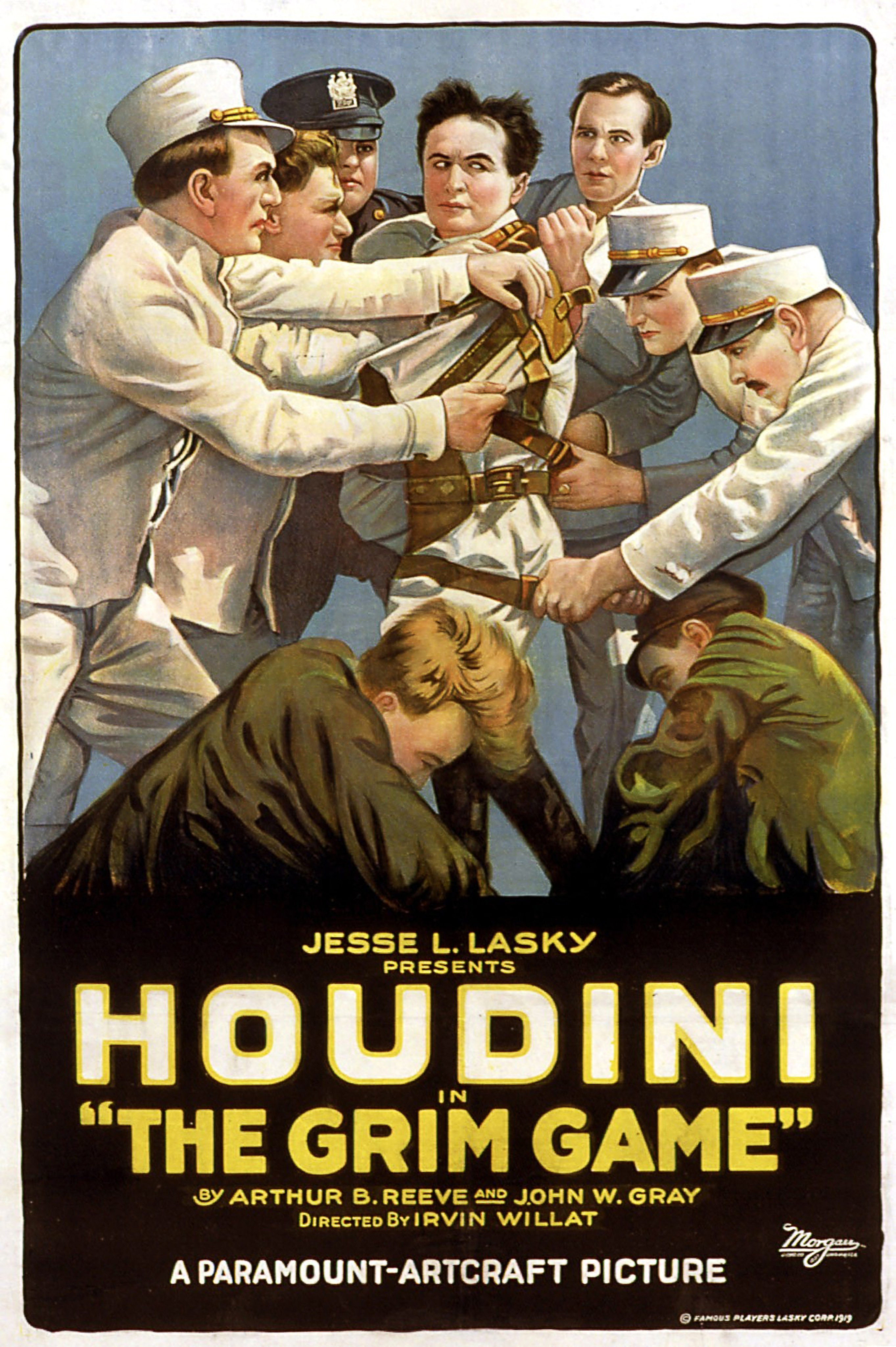
Sherlock and the escape artist

The incongruity of Sir Arthur Conan Doyle being a spiritualist has always been a poser. He created a classical character whose entire premise is his rationality, while he himself was a sucker for the irrational. Granted, Holmes believed that if you removed all the likely possibilities, then the unlikely possibilities were the correct ones, but it is still a great leap from the difficult-to-understand to the magical. But Doyle spent much of his time pursuing that magical.

Harry Houdini, on the other hand, was anything but magical. Much of his career was spent debunking the spiritualists of the day. Of course, Houdini knew first hand that the most amazing events ultimately consisted of tricks and secrets. Houdini didn't use magic to make his great escapes: he used hidden tools and a lot of practice. There were no ghosts in his life.

That Conan Doyle and Houdini got on as friends is one of those great pairings of history that are at once puzzling and at the same time oh-so-right. Margaret Eby writes:

Their friendship illustrates the warring impulses of intellectual life—the need to pick apart things to eliminate falsehoods, and the heartfelt want to be bamboozled sometimes, to acknowledge some sort of truth with a capital T... The gap between them is why both great detective stories and great magic tricks work. What are magic tricks anyway except for pretty little fictions about doves evaporating into thin air and smiling assistants being sawn in half without consequence, humans casually violating the insufferably strict laws of science?

The article is Hocus Pocus.

Poof!

Friday, March 23, 2012

Dame Edna is retiring

You may not take this particularly hard, from not really knowing much of her work. So, Possums, here's a sample:


Barry Humphries won a Tony Award in 2000 for his portrayal of Dame Edna Everage. Children, probably not a particularly large Dame Edna fan constituency, will no doubt recognize a different portrayal, the rather frightening Bruce:


You've gotta love Dame Edna, in any incarnation. Or is it Barry Humphries?

Thursday, March 22, 2012

Still need more proof?

We here at Grinwout's have never been able to fathom the meaning of the following scene. The preamble to the Constitution does not contain magic words of ethical pronouncement, but merely an explanation of why this new document was being written at a time when there was already a federation of the states, and many thought that the Constitutional Convention was not a legally viable proceeding. Nevertheless, Captain Kirk brings to these sentences a ferocity usually reserved for something more overwhelming, like "all men are created equal." But who looks to Star Trek for their history lessons?


Not only were Andrew Lloyd Webber and Stephen Sondheim born on this day. So was William Shatner. Grinwout's loves William Shatner, so why haven't Lloyd Webber or Sondheim ever used him in one of their shows? He'd be great in Cats. Maybe as Old Deuteronomy. Or imagine him as Sweeney Todd! But as musicals go, maybe our fellow birthday celebrants caught this performance, and figured what he did to Camelot should not be done to them:


Never make fun of Bill Shatner, because he'll beat you to it by a mile. He's got a one-man show on Broadway now, so maybe he doesn't need a composer anymore. The show is called Shatner's World, and we may live in it, but he's its god.

Live long and prosper, Mr. Shatner.

Wednesday, March 21, 2012

Florenz Ziegfeld, Jr.


The "glorifier of the American girl" was born on March 21, 1867. Today we remember Flo Ziegfeld primarily for his Ziegfeld Follies shows, theatrical revues that ran on Broadway for for almost 25 years in the early Twentieth Century. They did indeed feature plenty of women dressed to the nines and displayed as shimmering objects of desire. He was also the original producer of Show Boat, and the husband of Glinda Billie Burke.

There may be creaky footage of actual Follies, but MGM's take on the whole idea is brilliant. Plus, you get to see a most unusual Lucille Ball.


By the way, today is also Johann Sebastian Bach's birthday. But he never put on musical revues with lots of pretty girls (at least that we know about), so no one remembers him anymore.

Tuesday, March 20, 2012

The state of nature

We at Grinwout's occasionally work outside of the interwebs box, in the world of high school debate. In that world, where students are introduced to serious philosophy for the first time, the idea of the State of Nature, as Hobbes called it, is the perfect starting point when you're thinking about organizing society. After all, there's "continual fear, and danger of violent death," and life is "nasty, brutish and short." How convenient for debate coaches that William Golding wrote a book that is the State of Nature delivered on a silver platter, and that that book is quite a favorite among younger readers.

Golding himself sounds like a fascinating character. Toward the end of his life, he looked like a biblical patriarch, a suitable style for a Nobel laureate. He lived on the remote west end of England, in Cornwall, because "people can't get us." When Nigel Williams set out to meet him, in aid of doing a theatrical version of Lord of the Flies, he described him thus: "His beard, his watchful eyes and his no nonsense walk all suggested a schooner captain who had just got in from the South China Sea after some pretty hard sailing."

Williams's story of working with Golding and creating the theatrical piece, is that sort of reminiscence that makes one wish one was a fly on the wall for all of it:

When we got to his house, though – a big square place in its own grounds, just off a main road – it turned out to be as neat and precisely laid out as a ship’s cabin. We went straight through to the kitchen. On the wall was a note in charmingly childish handwriting, congratulating Grandpa on his Nobel prize... He was about nothing less than the important task of showing how a slowly nurtured democracy can collapse in the face of the lust for power, how religious instincts can be perverted into becoming a cloak for brutality and how the competition for scarce resources can betray humans into revealing their fundamentally animal nature.

The article is William Golding: A frighteningly honest writer.

Monday, March 19, 2012

You don't know Pan

There is a certain ubiquity to the idea of Peter Pan in our culture. As Alison Lurie writes in Who Is Peter Pan?:

Over the last hundred years this story has itself taken wing. Peter Pan’s name is now used symbolically for a bus company (speedy, thrilling travel), a brand of peanut butter (childhood treats), and shops, motels, and restaurants all over the world. A psychological disorder, the Peter Pan Syndrome, has also been named after Barrie’s hero. This unfortunate condition, according to the formerly best-selling book of the same name by Dr. Dan Kiley, published in 1983, afflicts a great many American men. Unlike the original Peter Pan, the victims of Peter Pan Syndrome don’t want to remain children; instead they are stuck in adolescence... This is all the fault of their parents: fathers who are cold and distant and mean; mothers who are weak and needy and neurotically emotional.

Good grief. That's a lot of baggage for a little boy who doesn't want to grow up. Still, that idea has an amazing appeal. If you're a kid, the idea of not growing up is pretty attractive. If you're an adult, the idea of being a kid is pretty attractive. If you watch the musical, the moment that will grab at your throat and mist over your eyes is at the end, when the boy Peter returns and faces Wendy once again, disappointed and somewhat accusatory at her committing the cardinal sin of growing up.

For people of my generation, the classic Pan was Mary Martin and the classic Hook was Cyril Ritchard. The play was aired regularly on TV, although probably not as regularly as The Wizard of Oz. Still, it was this version, and not the Disney one, that stuck overall, although Disney's Tinker Bell takes the award for overall cultural hegemony, Peter Pan division.

Lurie's article is very much worth reading for even dabblers in Peter Pania. One thing she leaves out that I read once, and which I really love, is the idea that in the play, Hook, always a dual performance with the children's father, was in one early version going to be a dual performance with the children's mother! Let your psychologists have at that!

Saturday, March 17, 2012

Weekend Pot Pourri Part 2

A few more stand-alones to end the week:

Anne RIce gets the full interview treatment: Authors@Google & Google Play Presents: Anne Rice

*

Andy Warhol’s ‘Screen Test’ of Bob Dylan: A Classic Meeting of Egos Andy Warhol iconocized (is that a word?) celebrities. Bob Dylan was a celebrity. Here's the result.

*

Artists at Google Presents Cirque du Soleil: TOTEM:


*

The movie opened 40 years ago this week. How many times have you seen it since then? The Anniversary You Can't Refuse: 40 Things You Didn't Know About The Godfather

Friday, March 16, 2012

The Broadway musical is going nowhere

My beef on Broadway musicals lately is how many of them are revivals. I have nothing against these revivals per se, and in fact, I like the idea that one can see top-rate performances of the classics on the stages where they were born, and that they're not all relegated to the annual show at the local high schools. But after a while, one does long for something new. And more, one longs for something different. You begin to believe that Broadway musicals are in a rut, and the new ones that come along, even the really good ones, aren't much different than the ones that came before. The reason, of course, is commerce. Broadway musicals are expensive to produce, and enough of them are flops already, so if you're investing your money, you want to see some return on investment. An experimental Broadway musical is pretty much an oxymoron.

Which would be fine, if there were other venues for experimentation. But as Ryan Bogner writes in Bound By Broadway: The State of the American Musical, Broadway isn't the place for it, and there are virtually no other places:

There are artists out there who are passionate about the form with varying ideas, who want to create work that is envelope-pushing, different, and meaningful, but who need institutions that want to nurture new voices in musical theater. In order for the full potential of the American musical to be reached, we will need institutions that will give these artists the chance to grow in an environment free from the pressures of commercial Broadway entertainment and expectations of financial success.

Where are those institutions? If you love the musical, you should read this article.

Wednesday, March 14, 2012

Bob and Ray

Set aside a little time for these greats of radio and TV. First, the worst interview ever:


Then there's the slow talker:


They were the voices of Bert and Harry Piel for many years:


And here's what they really look like:


A tip of the hat to SplitSider's article Revisiting the Long Careers of Bob and Ray for starting us on this tangent.

Tuesday, March 6, 2012

Mike Nichols

Nichols is directing the new Broadway production of Death of a Salesman, which is not an easy business. But maybe one forgets what Nichols has already accomplished:

After the international success of Nichols and May, whose humor often amounted to psychiatry by other means, he reinvented himself as a stage director, making hits of early-sixties Neil Simon comedies like Barefoot in the Park and The Odd Couple. A Newsweek cover story in 1966 heralded his defection to Hollywood, and though success onstage continued, it’s hard to overstate how much his first four film features—Who’s Afraid of Virginia Woolf?, The Graduate, Catch-22, and Carnal ­Knowledge—helped redefine American moviemaking as the upheavals of the sixties spilled into the seventies.

Apparently he made more money as the original producer of Annie than any of his other Broadway work. He was behind productions as dissimilar as HBO's Angels in America and Broadway's Spamalot. And he's done a million other things. So it's worth reading about him, and about his latest: When in Doubt, Seduce.

Saturday, March 3, 2012

Wednesday, February 29, 2012