Showing posts with label comics. Show all posts

Wednesday, May 23, 2012

Comic book movies

When you think about it, the success of the recent batch of comic book movies is sort of unexpected, given how poorly this sort of movie usually turned out in the past. One would expect the match of comics to movies would be a natural, given the cinematic nature of comics in the first place. Cross-cutting, close-up, long-shot, you name it, they're common to both, although originally these all came from the movies. To make the static drawn page move, comics artists picked up the language of film. Of course, they could do some things movies couldn't do, at least believably, at least until CGI came along. I think good classic comics appealed the way good classic movies did, to some need for creative fantastical narrative within the little kid inside all of us. Different media, working the same brain muscles.

Nowadays there's nothing a comic can do that a movie can't do. As a result, we get movies like Battleship, an improbable concoction of CGI and commerce that audiences indicate with authority that they're simple not buying it. (One has to hope that numerous heads roll in the producers' offices for this one. What were they thinking? I can't get past the fact that somebody took a game we used to play with pencils and paper and made a plastic game out of it, much less making a movie out of that plastic game. I mean, seriously now.) On the other hand, we get comics that have completely moved away from the slam-bang cinematic into the literary, like Are You My Mother? Movies and comics, the latter spawned out of the former, have moved in whatever direction they wanted. Comics don't need the lexicon of movies anymore, and movies don't need the mythology of comics. Good is good and bad is bad, and that's all you need to know.

But when movies have directed adapted superhero comics, they've taken on a particular burden. These movies need to be slam-bang, which makes them expensive, and to earn back their costs, they have to appeal both to fans of the original comics and the general public. This is no easy feat, but lately Hollywood has been pulling it off, with the latest batch of Marvel films being almost completely successful at it. Shoshana Kessock comes up with what look to me like good reasons for this in Graphic Alchemy: The Evolution of the Comic Book Movie. If, like me, you've been enjoying these films, this article does a good job of explaining why they've been successful, and why some others haven't. (I used the Ghost Rider poster ironically, needless to say. I do sort of want to see that movie, I have to admit, but then again, I'm a fan of Nic Cage going over the top. Isn't everyone?)
.

Tuesday, May 15, 2012

Stan the Man

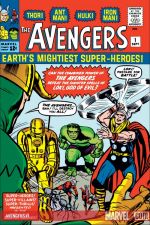
For whatever reason, the batch of Marvel movies made since Spider-Man have been, for the most part, pretty good. Not just successful, but basically good stuff. Sure, a few of them have been throwaways, and a few just didn't make it (Eric Bana's—and Ang Lee's!—Hulk was enough to keep me away from Edward Norton's Incredible Hulk, and I think Edward Norton walks on water, except there's no way Hulk is walking on any water, so you know I was totally Hulked out by the first flop), but most of them have been good, entertaining pop movies, the kind that insist you grab some popcorn and sit in a movie theater and go whole hog with them. The Avengers, something of a culmination of a whole bunch that came before, with the bonus of Joss Whedon at the helm (I'm still waiting for season 2 of Firefly), is one of the best of the bunch. For once even the Hulk works, although they do keep him under wraps most of the time. Smart idea. Smart movie, with Whedon the icing on the cake. How many billions is this thing going to make, anyhow? And how right was Disney to buy out this franchise?

Of course, the movies are a phenomenon that couldn't exist without the comics that established these characters. And those comics came out originally over a very short period, a sort of Golden Age when we went from zero to Hulk, Spidey, Fantastic 4, Thor, Iron Man and, every philosopher's favorite, the Silver Surfer, in sixty seconds. (Silver Surfer: Now there's a character who's gotten short shrift in the movies, if you ask me. The Fantastic 4 pictures are the least of the franchise, for some reason. Too bad. The Surfer deserved better.) And all of this had the thumbprints of good old Stan Lee.

What, exactly, did Lee do in creating these characters and these stories? Well, there's the rub. None of those comics exist without a little thing called the artists, most especially Jack Kirby. There's no question that over the years Marvel pushed its artists in their promotion, but when all was said and done, the artists were hired guns, literally work for hire as it's called. Which means that, whatever his contributions, Lee is still getting the credit. Everyone else? Find their names in the movie credits. It's reached a point where certain members of the comic community are boycotting the Marvel films. But as Alex Pappademas says in his article The Inquisition of Mr. Marvel, the world at large has taken these films to heart; they don't need the comics community anymore.

I liked Pappademas's article a lot. It gives the history, and it goes mano a mano with Lee today. It's one of the best I've read (Grantland has to be among the best sites out there), and given that we are now in an Avengers feeding frenzy, now is the time to read it.

'Nuff said.
.

Friday, May 11, 2012

In defense of Superman

It isn't easy being Superman. You're virtually indestructible, you always have to do the right thing, and you're not even human. Once upon a time, it was easy to keep up with Kal-El; there was one story line that had had a beginning with the Kents and worked its way up to the comic you were holding in your hand. Then things went all over the map, and I can't remember anymore if Clark and Lois are married, or maybe it's Superman and Lois that are married. Or is it Clark and Superman? Whatever. In any case, the issue of the invulnerable hero still remains.

Thom Dunn takes this on in Superman: Stuffy Boy Scout, or Charming Folk Hero? Why, exactly, do we take this character so to heart?

Superman might represent an impossible ideal for us to live up to — but maybe that’s just what we need him to do. We don’t empathize with Superman, the way we often do with the heroes in our stories. Instead, we aspire to be him. Like John Henry, Superman stands up to the Machine, both so we don’t have to, and more importantly, so that we believe we can.

This is fun and smart. Superman is our longest-lived new god. How can you not wonder why?
.

Wednesday, May 9, 2012

Dick Tracy E-ticket attraction at Disney MGM Studios

Dick Tracy was going to be big. The Disney studio was going all in on this one, with star upon star in the cast, and a very hot Warren Beatty at the director's helm (and in the bright yellow trench coat of the lead character). It was a unique film, if you've ever happened to see it, especially visually. It was all about color, despite the fact that it's harder to imagine a more b&w bland character than the comic strip Dick Tracy. Whatever. One thing I always loved about the strip was the character names: B.O. Plenty, Sparkle Plenty, Pruneface, Flattop. The Sunday strips had a little box at the top designed as a couple of inch square looseleaf page called the Crimestopper's Textbook, with advice for being safe one way or the other. When I was a kid I was stymied by the idea of people actually cutting these things out and trying to make a book out of them. The fact that they were godawful dull, even to a kid, may have played into my interest. The fact that the resulting book would be beyond bizarre was also why I was so entranced by it.

Even though the Dick Tracy franchise was hardly a blockbuster in 1990, Disney expected this film to be big. BIG! It was going to be their blockbuster, and they poured a lot of money into it (which Disney exec Jeffrey Katzenberg famously, publicly, regretted). Before it all went down the tubes, the company saw that what was on the screen could also be on the ground, and began planning to bring Tracy into the parks, specifically at what was then Disney MGM Studios.

The 1990's press release was saying that " Guests will literally get "into the act" in this new high-tech action-adventure featuring the very latest in Audio-Animatronics, simulation, sound and special effects." And also: "Guests will join America's favorite comic-strip detective in a high-speed chase with his gangster adversaries."

That's from the Disney and More blog. They've got the whole story, and some luscious artwork. It definitely looks like an E-ticket attraction. Unfortunately, the movie's failure at the box office meant that it never got built, and we won't have to worry about running right to it at the rope drop next time we're down there.

Too bad. It looks like it would have been a good one.
.

Monday, May 7, 2012

What, me worry?


Mad magazine is now 60 years old? Older than either the Stones or the Beach Boys?

It's probably hard to understand the significance and impact of Mad back in the day. When it first came out, it was mostly parodies of comics, irreverent and funny but not terribly important. But slowly and steadily kids took it to heart (as did a few adults), and by the 60s the magazine was parodying just about everything, still irreverent and funny, at a time when everything seemed to be ripe for parody. They took no sides (although whoever you were, you assumed they were with you); they would lambaste your favorite film or book or whatever with just as much glee as they would lambaste your least favorites. You could rely on the usual gang of idiots to do their job month after month, and they were, honestly, one of the few aboveground presses doing what they were doing. They were up front about it. And meanwhile, they were ostensibly for kids? There are those who say that the whole 60s thing was brought on, in part, by the attitude adjustments of youth as persuaded by Mad, and although they certainly weren't alone in this, they were definitely in it. It had to be the most subversive legitimate magazine of all time.

Topless Robot has collected The 30 Nerdiest Mad Magazine Covers. Maybe, maybe not. But as a snapshot of how iconic Alfred E. Neuman is, as he takes on other icons, it's right on.

Mad isn't what it used to be in influence. But if you happen to pick one up, you'll see that it is still irreverent and funny. What more do you want, anyhow?
.


Wednesday, May 2, 2012

Quick take - Comic book advertising heroes

Like, for instance, Captain Tootsie, the hero who gets his strength from Tootsie Rolls. Poor guy. I mean, Captain Tootsie?

10 Strangest Advertising Superheroes of the 1940s
.

Thursday, April 19, 2012

Who would win?

Darth Vader vs. Voldemort. Sauron vs. Voldemort. Batman vs. Spiderman. Dracula vs. the Wolfman.

The adolescent imagination is filled with these sort of pairings. What would happen if you threw a hero or villain from one imaginary construct against an opponent from a different construct? The Grinwout has sat on long bus rides with high school debaters who can conduct a conversation along these lines for upwards of five hours. This is why the Grinwout has noice-reducing headphones.

But the idea of mixing and matching is not a new one. Universal Studios did all the early horror movies like Frankenstein and Dracula and The Invisible Man, and after they exhausted all the possibilities of return, revenge, son of, bride of, mother-in-law of, etc., they went to mixing them up against one another. The natural outcome of this was that teams of what were once collective nightmares found themselves in battle with Abbot and Costello, and losing. It was not a pretty sight. Then again, when I was in fifth grade, House of Dracula and House of Frankenstein, where the monsters were so numerous they had to take a number, were the hit of the playground.

The issue is the imaginary construct. As Stephen Padnick explains at Tor.com, some characters exist in their own singular construct, especially in movies:

Crossovers don’t really happen in films, outside the horror genre... The protagonists of long running film series rarely meet either. James Bond never hit on Sarah Conner to the disgust of her son. Indiana Jones did not team up with Rick Blaine to punch out Nazis while Marion Ravenwood drunkenly sang Marseilles, (though how cool would it be if they did?). Even superhero movies, which are almost as old as superhero comics, basically assume that their hero is the only superhero in the world, and their superhero origin is the only source of supernatural power.

This is not the case in comics, where all the characters exist in the same universe, and cross over all the time. Which is why we have the Justice League and the Avengers. In fact, each individual comic nowadays is simply one episode of the narrative that crosses all the comics of a particular publisher. I recently was checking out a Green Lantern narrative on my iPad that, if I were to have purchased it, would have covered dozens of comics across multiple venues, and it took about three spreadsheets and an extra can of Red Bull to even begin to figure it out.

Inspired by the upcoming Avengers movie, the first to provide celluloid crossover, Padnick parses it out in The Avengers, the Argonauts, and the History of the Team-Up.

Wednesday, April 11, 2012

The Hulk


Yet more comics stuff you're probably unaware of, unless you keep up with your comics.

As we said earlier today, in regard to Wonder Woman, we were avid comic readers in our day, from grammar school through college. As far as higher education was concerned, there was a bookstore downtown that sold out-of-date comics in the basement, at bargain-basement prices. You could stock up on a five-year supply of whatever, but mostly Marvels. Thor, the Silver Surfer, Spidey—they were all there. And the Hulk, of course. My fellow scholars and I spent many happy hours collecting and reading these volumes.

The Hulk has gone through a lot of changes over the years. He got tossed into a goofy TV show, for one thing, and there have been a couple of movies, but meanwhile, he's still had his magazine life. Until the final issue.

And then he is reborn. Wreaks some havoc.

And then there's the final issue.

And then he is reborn. Wreaks some havoc.

He's green.

He's gray.

And then there's the final issue.

And then he is reborn. Wreaks some havoc.

He's red (and not Bruce Banner).

And then there's the final Bruce Banner issue.

I may be getting some of this out of order. For an up-to-date look at the life, and death, and life, and death, and life, etc., of the Hulk, check out Gallery: The Evolution Of The Hulk In Comics.

Wonder Woman's new Amazons

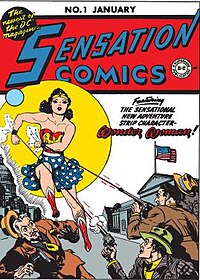
As a comic-addicted kid in the Fifties, I have to admit that Wonder Woman was not on my required reading list. Theoretically she ought to have at least appealed to the nascent leering adolescent that lurked within me, but as a superhero she just didn't make the grade. I was of the Superman persuasion myself, with a nod in the direction of the Flash and Green Lantern and the like. I preferred male superheroes because I wanted to be one myself. I could easily imagine myself flying around saving the world a la Clark Kent, but couldn't quite work in Diana of Themyscira. Overcoming villains with a lasso and a pair of bracelets? Gimme a break! That is not pre-adolescent boy material, not no how, at least for this particular pre-adolescent boy.

I'm not sure if Wonder Woman was intended as a superhero for girls or not, but there was no question that she was something of a feminist, given the definition of feminism at the time. And she was part of the all-female Amazon world of Paradise Island, where the women were head and shoulders above any men one might dig up on other parts of the world. Part of my pre-adolescence elided the problem of where all these women came from in the first place, but one lets that sort of thing ride in aid of a better narrative, I guess.

Things are not the same in the Wonder Woman universe these days. Writing for Tor.com, Shoshana Kessock reports on some seriously disturbing new origins:

In the original DC history, Wonder Woman is raised by the immortal Amazon women as the only child on Paradise Island, daughter of their Queen Hippolytta. Her sister Amazons live isolated from men pursuing perfection of their culture without having children, focused on their own interests and largely happy. This history has largely stood untouched until the drastic recent rewrite. In Wonder Woman #7, Wonder Woman is still reeling from the discovery that she is in fact the daughter of Zeus from an extra-marital affair with the queen of the Amazons when she is forced to plan an invasion of the underworld to rescue a woman also bearing Zeus’s child. When she goes to the god Hephaestus for help, he reveals that all the men working in his forge are in fact the offspring of Amazons, sold as unwanted male children for weapons.

Yikes! The Amazons sell of their used men as slaves to Hephaestus? That, in a word, is pretty cold.

What to make of all of this? Decide for yourself. Read Wonder Woman Comics and the Violation of the Amazons.

Friday, April 6, 2012

Quick Take - Garbage Pail Kids

Yuck. These things came out when my daughter was little, a parody of the Cabbage Patch Kids (also Yuck, but for different reasons). There's a slide show on Slate that will remind you of all of that, which I know you've been trying to forget, unless you're a kid yourself, in which case you can be nostalgic for someone else's youth.

Curiously enough, Art Speigelman was one of the artists behind these works.

Tuesday, March 27, 2012

Superman is a twerp

It used to be that comics, rather than having one story spreading out over multiple issues, had multiple stories in one issue. They also used to cost a dime. In the '50s, a quarter would get you a gargantuan annual, the comic equivalent of War and Peace. When the price of regular comics went to twelve cents, I, for one, was outraged. Who could afford such an investment?

Meanwhile, I guess if you have to grind out a whole bunch of stories month after month after month, you start to weary of all that super good guy stuff. 17 vintage comic book covers where Superman is a complete sociopath demonstrates some of where this weariness led.


Via.

Thursday, March 1, 2012

Ya' got trouble, right here in Riverdale city

First of all, there's the whole Archie gay marriage thing: One Million Moms hate 'Archie' comics and gay marriage. I find it curious that of all the mainstream comics in the world, it was Archie that looked at gay themes first. Archie? Betty and Veronica? Jughead? Of course, I applaud them for it. But it is a kettle of fish, in a way. It's not that I don't want to live in a world where there's same sex marriage in Archie comic books (and everywhere else, for that matter; Grinwout's proudly believes in live and let live). But the process of getting there is painful: You have to get past Toys R Us and a Million Moms first.

Then there's the video clip that EW.com has decided to post. The animation is dreadful; it's as "animated" as five-day-old roadkill. Who was the psychedelic effects for? Tripping pre-schoolers? And most puzzling of all, why does Jughead's girlfriend look just like Jughead? Is that his twin sister? Is the underlying message that people who fall in love are supposed to look alike? If so, the natural conclusion is that Betty and Veronica—

Hmmmmm.