Showing posts with label publishing. Show all posts

Saturday, April 7, 2012

Make your own amusement park rides!


This being the Saturday before Easter, right now Walt Disney World is not crowded. Not at all. What it is is CROWDED!!! For the people who are there waiting in line, this would be the perfect time to catch up on old Grinwout's entries. For the rest of us, this might be good time to design some new rides, so that these people won't have to wait in line for so long.

Yeah, right. I'm sure the Disney folks are just dying to hear from us.

It was only a generation or so ago when the idea of inventing amusement park rides might not seem so farfetched. America was a country of inventors and engineers. We could make anything we needed when we needed it. We had toys for kids who were the inventors of tomorrow (erector sets and chemistry sets) and we had magazines for the grownup inventors of the day (Popular Science and Popular Mechanics). To some extent these were probably inventor porn, just laying out all the things we could invent if in fact we invented anything but we never did, but then again, this was a golden age of electronic kits so that people could build their own stereos or radios or whatever. (Steve Wozniak was one of these build-it-yourselfers; the original Apple was entirely aimed at this market.) Maybe there really were a lot of DIY amusement park rides.

The June 1945 issue of Mechanix Illustrated (you've gotta love that futuristic x in Mechanix) explained how your inner inventor could make a fortune designing carnival rides. Because they were portable, every traveling carny in the country would want to buy one, as compared to the stodgier permanent parks. As a matter of fact, the "ride men" were apparently just waiting at their mailboxes for you to send in your designs, provided your designs were what the industry needed.

Safety, of course, is a prime consideration no matter what type of ride you create. All amusement riding devices are perfectly safe and no new ride will be considered unless it is safe not only for adults but for small children; a big slice of riding device income comes from small kids, and a ride operator doesn’t want to kill off his customers! It is possible, however, to make even the most violent ride perfectly safe. But you’d be surprised how many would-be inventors never give this vital factor a thought.

Even back in 1945, killing off your patrons was frowned on. Very sharp thinking on the part of the ride men!

There's jpgs of the original article, plus the transcribed text, at WANTED – A MILLION-DOLLAR RIDE (Jun, 1945).

Via Boing Boing.

Wednesday, April 4, 2012

The Ultimate SF resource

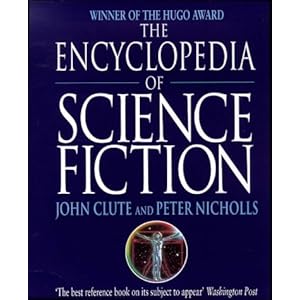
Maybe Grinwout's is a tad prejudiced about this one, having been the publisher of the first US edition back in the 70s, but The Encyclopedia of Science Fiction by John Clute and Peter Nicholls is the most useful, and most entertaining, SFF resource in the galaxy. I remember reading every word of this as it came to us, not because I needed to (we were picking up the British edition) but because I couldn't stop myself. For instance, I discovered the legendary editor T O'Conor Sloane (and there is no period after the T, an affectation that my colleague, T O'Conor Sloane, III, carried on). Sloane the FIrst was the editor of Amazing Stories. Here's how he is described in the Encyclopedia:

Nearing his 80th year when he finally succeeded to the editorship, Sloane had a long white beard and an appropriately Rip Van Winkle-like approach to the job; though he worked for twelve years on SF Magazines, he stated publicly (in a 1929 Amazing editorial) his belief that Man would never achieve space travel. Amazing nevertheless bought the first stories of such writers as E E Smith, John W Campbell Jr and Jack Williamson... Sloane actually lost the manuscript of Campbell's first story, and returned Clifford D Simak's first submission after four years' silence, remarking that it was "a bit dated".

Priceless.

All SFF fans need this book in their library, end of story. But this being the age of the interwebs, and this being an encyclopedia of the fantastic, after all, you can now get it online. Bookmark this site, make it your homepage, follow it on Twitter or Facebook, but whatever you do, link up with it. You'll wonder how you lived without it till now.

Monday, March 19, 2012

The other papers

Today if you wish to find out what is happening, or read articles of a particular political slant, or follow writers who are not in the mainstream, you can pretty much just switch on the nearest electrical device and get total satisfaction. It has not ever been so, or at least not in the not so distant past.

The history of newspapers is one of ever-increasing centralization. The press that was given freedom by the Founders in the Bill or Rights was an opinionated cacophony of paper, some of which had news and most of which had attacks on one politician or another, some of them far from genteel. President John Adams, while the ink on the Constitution was still not quite dry, was already fed up with the whole thing, and thus we got the famous Alien and Sedition Acts. In a way, the early press, in cahoots with relatively general literacy, is similar to the early days of computing: everybody who wanted could pretty much have access to the means of publication, and publish they did. (Come to think of it, that also sounds like today's computing!)

As newspapers became businesses (think Citizen Kane), competition was fierce. New York after World War II had a lot of papers, morning and evening. Different editions of the same papers were published daily. News hot off the press was literally hot off the press. And then, one after another, the papers started dying off. There are still a few holdouts, but are they the same source of news they used to be?

When the newspaper scene was still relatively heady in New York, there was, nonetheless, a similarity among all of them. The world was going through unique cultural changes, but the papers, aside from being various flavors of liberal or conservative, were nonetheless not a part of those cultural changes, which as far as they were concerned might as well not even exist. Into this countercultural background came, in New York, the Village Voice and the East Village Other, alternate papers that offered not merely a unique political viewpoint but a glimpse into a whole other world. Other big cities started having their alternate papers as well. Journalism started to change. It wasn't about capturing the events in a neutral voice anymore; the journalist could interject his or her own voice into the story. At the extremes (for example, with Hunter S. Thompson), the journalist could become the story.

The internet, of course, makes all of this sound old hat. An article like John Wilcock: The Puppet Master of '60s Underground Newspapers brings it all back so clearly. Read it if you're curious about the mainstream of non-mainstream 60s culture.