Showing posts with label art. Show all posts

Friday, May 25, 2012

Lego art

This video gets serious about a subject that we constantly toss around lightly. Every time you turn around on the interwebs, there's some new, often amazing, occasionally ridiculous new Lego creation. We are obviously obsessed with these little blocks and their versatility. In this short, three artists who are very much artists absent Legos, talk about Legos as art. And they show some amazing creations.


They keep raising the bar on us!

Via
.

Thursday, May 24, 2012

Museum viewing


As a museum goer, I wouldn't necessarily say that I have a set pattern of approach. Much depends on the museum itself. Is it big or small? New to me or an old standby? Is there something I particularly want to see or am I just browsing through? These factors all must be taken into consideration. Still, I think I do have some repeated characteristics.

First, I try to figure out how a gallery is designed. Should I start on the left or right side? Since someone gave some thought to hanging those pictures (for argument's sake we'll assume we're looking at paintings, but a museum is a museum is a museum), I want to follow that thought. Probably things will be arranged chronologically. That makes sense, and I'll want to follow that chronology. Then there's the reading of the overall gallery tag, if any, the big set of text that our gallery has written to explain this particular room. I don't want to guess what the room is about. And I want whatever information is being given out beforehand. I could easily see someone wanting it the other way around. Look first to get a sense of the work, then read the explanation.

Next comes the hard part. Look at the damned picture. At the individual picture level, look at the thing first before reading the tag. I find that I can easily walk up to a picture and read the tag to find out what the picture is about, then I glance at the picture and go on to the next tag, and repeat the process, hardly spending any time at all considering the art. My problem is, I tend to be word-oriented. Although I came to the museum to see the pictures, not to read the tags, I could easily spend 90% of my time reading and only 10% looking. Obviously this is something to avoid, and I make a conscious effort to do so.

I've got a two-hour span of art attention. Doesn't matter what the art is, two hours later and I'm in the gift shop. Some museums are two-hour museums. Others are two-year museums that I approach two hours at a time. I have on occasion taken a lunch break after my two hours and been able to go back for more, stretching beyond my two hours, but as time goes by my brain fills up and I'm not really looking anymore. I'm not even reading the tags!

The last step is to discuss. I will compare notes with my wife on what we saw, especially if it was something new to us. Actually, sometimes this is the penultimate step, because I'll go on to do some back reading and maybe even write something up after the fact. The thing is, I consider art to be of paramount importance, so I don't just drop in on it once in a while and that's the end of it. But still, I have my two-hour limit. If I were being paid to look at art, in other words, at best I would be a part-timer.

There are numerous studies on how exhibitors should most effectively ply their trade. Anyone who goes to museums over a space of time will see fashions in how things are presented. We are in a period now where interactivity is considered very valuable, and where exhibits and sometimes entire museums are, as some would put it, Disneyfied. The idea that works can stand alone in their presentation to the general public has long gone. Compare the old galleries of the 19th century (like in Morse's famous painting above) to present galleries. In the old galleries, painting was piled on painting and the eye went where the eye went. Now the eye probably goes where the curator wants it to go.

What a Physics Student Can Teach Us About How Visitors Walk Through a Museum is an article from the Smithsonian that covers some of this. Apparently no one has scientifically looked at how people approach museums, and while this article isn't definitive by any means, it is thoughtful.
.

Tuesday, May 22, 2012

How are things on Rapa Nui?

Apparently, all those famous statues are actually guys standing in holes. Who says you don't learn something new every day?

Check out the slide show: Easter Island statues have full bodies and contain ancient petroglyphs.
.


Monday, May 21, 2012

Going backwards in photography

Digital cameras are wonderful, don't get me wrong. I like having a nice way to take pictures in my pocket at all times (especially since that picture-taking device also makes phone calls and plays games), and with my SLR, I like knowing that I can take pictures all day and all night and never think once about running out of film, or even worse, paying to develop all that film. But still, I remember back to my first days of photography, when I had my own little darkroom, and I developed my Tri-X film in a plastic container and then hung up the negatives to dry, and then made contact sheets and finally prints, and the whole place smelled like chemicals and the end result was something I had created from start to finish.

Now imagine that with tintypes, where as with digital there's no film, but instead of having the picture in electrons, you have in on a plate. These pictures are great, and watching the process is intriguing.


[Via Coudal] [And the Cool Hunting site isn't too shabby, either.]
.

Monday, May 14, 2012

Eno on music and the arts

Brian Eno is really smart. He's obviously also a really good musician, having worked with just about everybody you can think of in the last few decades. But he's also a thinker. In this lecture he puts recorded music into its place in musical history, and he weaves a great narrative about recorded music and producers (like himself) and players. Then he goes into painting (he has an art training background), explaining abstract painting, for instance. It takes time to get started, and the introduction is in Russian, but once Eno comes on, you'll be in for the long haul: Brian Eno lecture on music and art

Here's a little Eno to get you in the mood:


.

Friday, May 11, 2012

Dali

Take a look at that Carl Van Vechten photo of the artist as a young man. Devilish? You betcha.

Salvador Dali was born on May 11, 1904, and was active in all sorts of media, including the movie Un Chien Andalou with the ants and the eye (if you haven't seen it, and you're a movie fan, you have no choice but to go to YouTube and watch it now—we'll wait here for you), and the short for Disney, Destino, only recently completed and released. His most famous painting is "The Persistence of Memory," and some of his best work was for an illustrated Bible. But his masterpiece, without doubt, was his creation of Salvador Dali. He was born at the perfect time to capitalize on the nascent mass media of the 20th Century, and his fame, much of which was based (surrealistically) on his fame, put Andy Warhol to shame by that particular standard. Dali was one of the founding fathers of modernism and postmodernism both, and knew what he was doing every step of the way.

There's a fun little interview on Open Culture, with some further links if you want to dig deeper in general. Since Grinwout's is an acknowledged fan of World's Fairs, we'll just note that his sojourn in New York (around the time the photo above was taken) was well publicized, to put it mildly. He took the city by storm, above and beyond what he did at the fair. I'm not sure what fair promoters were expecting from Dream of Venus, but this is what they got. Racy? Well, the '39 Fair was racy, in its way. (Look it up, if you don't believe me.)


Dali left behind some remarkable art. We can probably now evaluate the work aside from the man, but since we have the man around if we want (thank God for film!), I don't know if we really should.
.


Thursday, April 12, 2012

Thomas Kinkade

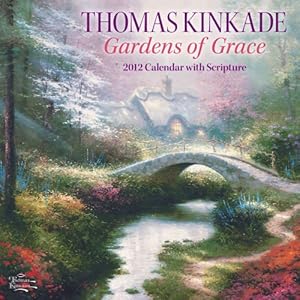
There's a Thomas Kinkade store in the mall next door to my office. When you walk past it, you see a mixture of sports paintings, simulations of Disney parks and movies, and cozy cottages. All of these images are of a piece. They represent something we long for, presented in an idealized way that takes the desirable and makes it even more desirable. Gilding the lily, you might say, almost literally, given Kinkade's use of light effects in his work. You can purchase his work at all levels of price: there's something for everyone. His success, at least in terms of popularity, was undeniable.
When Kinkade died last week, the knives were immediately drawn. Art critics have, almost universally, panned his worked. Then again, plenty of these same art critics think the world of sharks floating in formaldehyde, so I don't exactly know how good a barometer they might be. That's the problem with art. The gatekeepers are this exclusive group of critics and gallery owners who explain to the rest of us what we should like and dislike. Well, that's all well and good, and I appreciate learning from an expert where a given piece might fit in history, but I'll be the one who decides if I like it. (There's a great play on the old joke in a New Yorker cartoon of someone carefully studying a painting: "He knows a lot about art but he doesn't know what he likes.")

The point is, say what you will about Kinkade, a lot of people loved his stuff:

His images are basically devoid of emotional darkness. Whether you find that cloying or comforting is “the essential divide between people who respond to his work and people who don’t,” [art historian Alexis] Boylan says. “It all comes down to: What part of yourself do you want to see reflected when you look at a work of art?...‘Soothing’ is not how a lot of people would define a lot of the art you see in museums and galleries, but historically, a lot of art has been produced with the sole purpose of being beautiful and comforting, and giving people pleasure.”

Like him or not, he's a force to be reckoned with. So is the question of the purpose of art. Read Why Thomas Kinkade’s Art Touched So Many.

Tuesday, April 10, 2012

Google Art Project

In its evil plan to own all the information in the universe, Google has done some amazing things. And some of them we don't all even necessarily know about. We can probably take a poll of random folks on the street and get the vast majority of them to identify Google with searching, but after that, everyone is on their own. Sometimes it's things that come and go (did anyone ever understand Google Wave?), and lately it's Google+, but put all that to the side for the moment. Watch this video:


The site is http://www.googleartproject.com/. Here's how they describe it (and you have to dig to find this):

The Art Project is a collaboration between Google and 151 acclaimed art partners from across 40 countries. Using a combination of various Google technologies and expert information provided by our museum partners, we have created a unique online art experience. Users can explore a wide range of artworks at brushstroke level detail, take a virtual tour of a museum and even build their own collections to share. With a team of Googlers working across many product areas we are able to harness the best of Google to power the Art Project experience. Few people will ever be lucky enough to be able to visit every museum or see every work of art they’re interested in but now many more can enjoy over 30 000 works of art from sculpture to architecture and drawings and explore over 150 collections from 40 countries, all in one place. We’re also lucky at Google to have the technology to make this kind of project a reality.

There is an enormous difference between seeing works of art in person and seeing representations of them, but that said, since we obviously can't see all of them, a representation like this is a pretty good second best. You can get lost in here for months.

Try it.

Tuesday, April 3, 2012

On being first

In science, if one discovers, say, the force of gravity, the important thing is not so much the discovery as the fact that we now know the force of gravity, and our knowledge about the universe can proceed accordingly. Nevertheless, from the discoverer's point of view, nobody wants to be second. In science, being second means that someone else discovered or invented it first. Their name will go down in history. Yours will not.

Contrast this to art. With art, if you paint the Sistine chapel, well, you painted the Sistine Chapel. If you wrote War and Peace, you wrote War and Peace. There's no such thing as coming in second, because works of art are unique (or at least, have been unique up until the contemporary period, thanks to folks like Andy Warhol). Then again, all works of art flow historically from all previous works of art. Individual achievement incorporates prior achievements by others. Nowadays it's as simple as sampling a riff from a Beatle song, but for the Beatles, it was the absorption of the music that preceded them, the blues and skiffle and swing, and transforming it into Beatle music. Of course, samplers will insist that they are part of this tradition, and they may be right!

Creativity is a wondrous subject.

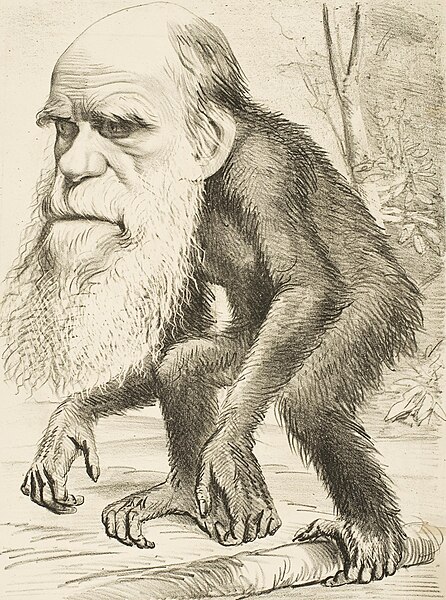
Ian McEwan compares scientific creativity with artistic creativity in an article for The Guardian. He begins by telling the story of Darwin and Wallace. They had both been working on the subject of evolution, but Darwin hadn't published (although he had begun his work prior to Wallace), and then he received Wallace's papers, to make them public. Darwin was put in the position of having been the first, but making himself look like the second. Fired up by a sense of purpose, he wrote The Origin of Species. And that sense of purpose was informed by one thing:

The Origin, written in 13 months, represents an extraordinary intellectual feat: mature insight, deep knowledge and observational powers, the marshalling of facts, the elucidation of near-irrefutable arguments in the service of a profound insight into natural processes. The reluctance to upset his wife Emma's religious devotion, or to contradict the theological certainties of his scientific colleagues, or to find himself in the unlikely role of iconoclast, a radical dissenter in Victorian society, all were swept aside for fear of another man taking possession of and getting credit for the ideas he believed to be his.

In a word, Darwin couldn't abide not being the first.

McEwan's article covers a lot of philosophic, scientific, artistic and humanistic ground. It's called The originality of the species. It's worth a look.

Monday, April 2, 2012

Modern photographers

We are all photographers. It used to be, if you wanted to be a photographer, you had to have a camera and some film. But as a mark of total cultural upheaval, Kodak doesn't manufacture Kodachrome anymore. You can still pick up rolls of Tri-X, the quintessential black-and-white film that all hobbyists used to start out with (and photojournalists would swear by, although I gather that now professionals have gone on to T-MAX). Instead of film today we use digital media, and we've traded in our cameras for telephones. But there is a boon in digital photography with all those non-cameras available in half the devices we all own. We now take more pictures than we ever have before. And there are so many digital photography apps that it's impossible to keep track.
In other words, photography is dead, and it is thriving. It depends on how you define photography.

So what does this mean to artists who use photography as a medium? Complex posts a survey of The 25 Photographers You Should Know by Elisa Carmichael that is a great starting point for figuring out the state of the art. Check out the specs on the pictures. For the most part, even if the images were captured digitally, a lot of hand-crafting went into their printing. In other words, while looking at them on the computer gives you a sense, is it only a sense, much like looking at a painting on the computer. Seeing that Monet slapped down some green paint to capture those water lilies in the pond next to his house is not the same as being surrounded by these paintings on the wall. I think we shortchange photography a lot, especially now that its digital nature makes it seem so fungible.

In any case, since you're probably taking a lot of pictures yourself, it's nice to see that the pros are up to.

Monday, March 26, 2012

Paris revisited. Again.

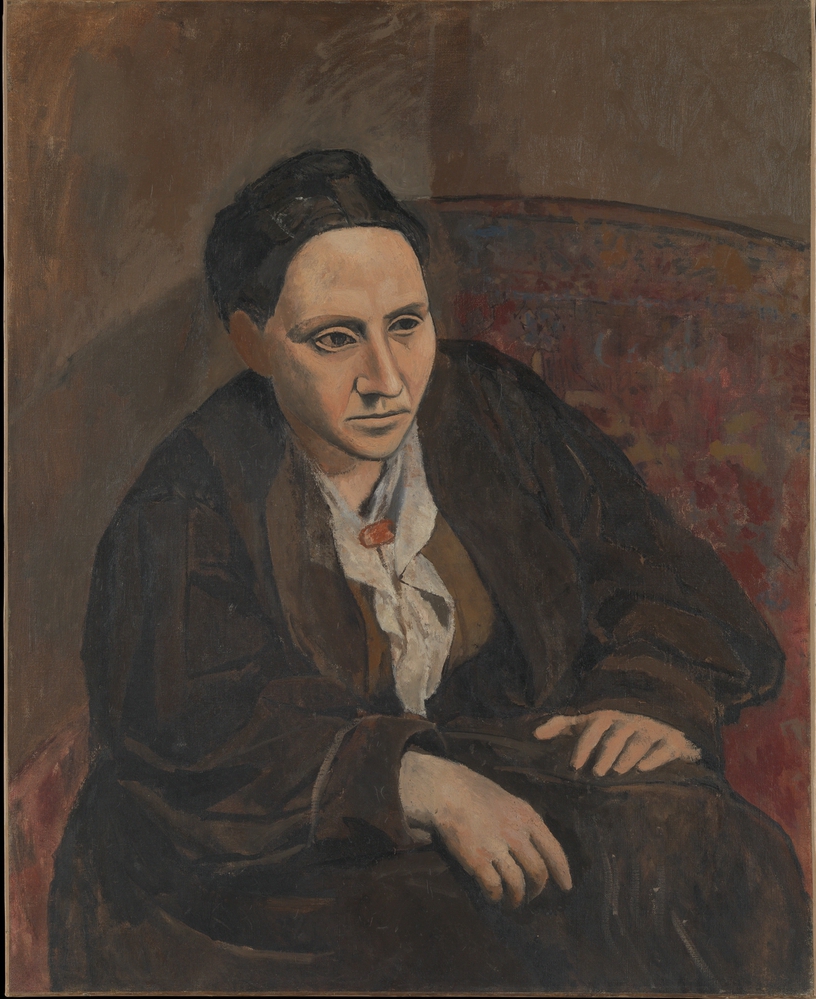
We were big fans of the Woody Allen movie Midnight in Paris. There was something magical about traveling back in time to his version of the emigre scene in 1920s Paris. Gertrude Stein, Hemingway, the Fitzgeralds, Picasso... All of the stories are legendary, and most of the works still dazzle. The reason the hero of the film is transported back to this time is precisely because of all this magic.

It was a real time though, and probably really magical. We have the books and the art from the time to tease us about it. Warren Perry writes about it all in the National Portrait Gallery Face to Face blog:

The other preoccupation of this period was, of course, art—in all its forms. Painting, writing, theater, and dance were all appreciated facets of the cultural scene. While Fitzgerald and Hemingway were alternately feathering and grinding words onto paper, [Gerald] Murphy and Picasso were splashing paints onto canvases, and Zelda Fitzgerald somehow convinced herself that she should become a ballerina, though her habits and age were somewhat ballet-prohibitive. All of these individuals met with creative success, even Zelda, who danced in staged works and gave herself over manically to ballet.

The glimpses of the art are well worth a visit: A Moveable Force: The Resonance of the Expatriate Experience

Friday, March 23, 2012

The art of video games

There is much contesting of the idea that video games can be art. On the other hand, there is little argument that games are not a part of our cultural landscape.

Computers are not particularly old, and the first computer game was patented in 1948. Pong was released in 1972, and the age of the video arcade soon followed. So did the age of the home console, with the Magnavox Odyssey coming out that same year. When PCs came along in the 80s, games were right there with them. Today games are ubiquitous, on virtually every technical device that manufacturers can squeeze them on, and they range from the light and casual to the hardcore, and there’s something for everybody.

Are they art? Well, they certainly incorporate a lot of things we think of as art in other contexts. They have a strong visual component, and they often incorporate music, but then again, my supermarket uses visual tricks and music to get me to buy more cauliflower, so those alone may not be enough. They also have narrative, that is, a beginning, a middle and an end, and in that are like movies (which also have the visual and audio components). That the narrative is driven by the viewer/user and not the creator (in a way, although the creator is still ultimately responsible for the parameters of the experience), gives some critics pause. The question has to boil down to our definition of art. If art is something that moves us on a combined emotional and intellectual level, which is not a bad definition, than I’d have to say that they are art. Marcel Duchamp’s found art, which is a signed piece of old plumbing, moves us on a combined emotional and intellectual level. Monet’s lily pads move us on a combined emotional and intellectual level. Citizen Kane and Hamlet move us on a combined emotional and intellectual level. Beethoven does it. Why not BioShock? Let’s put it this way. Even if you believe that video games aren’t there yet, they’ll be there soon enough. And just as all paintings and movies and plays and music don’t move us on a combined emotional and intellectual level, neither will all video games. That any of them do, makes those that do, art. The ones that don’t? Either they’re just commerce, or bad/failed art.

In any case, whatever you believe about games as art, they’re now being exhibited in the Smithsonian. But keep this in perspective. They also have locomotives and Fonzie’s leather jacket in the Smithsonian.

Smithsonian scores with ‘Art of Video Games’ exhibit

How Video Games Ended Up in the Smithsonian

Sunday, March 4, 2012

Ralph McQuarrie, R.I.P.

Ralph McQuarrie, 1929–2012

Norman Rockwell

It’s worth visiting the Norman Rockwell museum in Stockbridge, Massachusetts, if you have any interest in American popular culture, illustration and/or art. Regardless of how one feels about Rockwell as an artist, or even an illustrator, there is no question that his work captures the American spirit at a certain time in our history. Those Saturday Evening Post covers went on for almost fifty years, starting in 1916, when he was 22 years old. That’s quite a body of work.

It seems that Rockwell, who for a long time was not considered a serious artist by the people who get paid to consider such things, is lately becoming considered a serious artist. Or maybe not, depending on your point of view. After all, we live in a world that seemed to go wild over Damien Hirst’s dots not so long ago (or at least those people went wild who get paid to consider such things as whether the various dot paintings by people on Hirst’s staff working under his direction are actually art).

So where is the debate on Rockwell at the moment? A feel-good master’s complex message in the Guardian sums it up. They also provide a few samples at Why Norman Rockwell is still cool.

I say, decide for yourself. The business of art criticism is way too complex to leave it in the hands of the art critics.