Wednesday, May 2, 2012

God Only Knows

The Beach Boys are recording and touring again. They've had a complex, storied past, not the least part of which has been the personal trials of Brian Wilson. But for quite some time now, Wilson has had a productive solo career, and seems to be in good shape. We can only wish him continued prosperity.

Of all the songs he has written, one stands out as, perhaps, the best of the best. You might have other favorites, but listen to the vocals, removed from the accompaniment.


Here's Brian looking relatively unhappy, performing it in 1981. He was not in the best of shape, but this song conquers its creator.


Brian got himself together and started performing again, and was looking good in 2002. He still doesn't look like a happy performer, though.


But Elton John, by contrast, is an ecstatic performer. You feel like he's holding himself in, but also you feel like he's doing exactly what he needs to do for this song. (Stick with it for the second number.)


There are other versions of the song out there, including one by David Bowie that is way too Bowie and way not enough Wilson. But mostly, no matter who performs it, it's a beauty. Too bad the McCartney/Wilson collaboration that's on YouTube doesn't sound too good; "Pet Sounds" was one of McCartney's great inspirations, and he claims it gave him the spiritual nod to experiment on Sgt. Pepper.

There's plenty of other amazing Wilson music in addition to this. It's nice that the Boys are on the road again, with Wilson a part of them. Sometimes there really are happy endings.

[Inspired by The 25 Best Beach Boys Covers.]
.

Quick take - Mario Batali's home kitchen

From Esquire.com.
.

Link Wray

I saw Link Wray back in the 70s at a club called the Bottom Line in New York City. My ears are still ringing.

Wray was born 5/2/29, and was one of the inventors of rock guitar playing. In 1958 he recorded "Rumble," which is pretty much the first thing that comes up when his name is mentioned. He kept playing it for the rest of his career.


Link Wray was probably the coolest person in the room, no matter what room he was in. He's credited with inventing heavy metal and punk, but personally, my greatest regard is for his rockabilly work (Retro-rockabilly, actually).


As you can see, Wray is still the coolest person in the room, but that bass player is giving him a little competition. "My gal is red hot, you're gal ain't doodly squat," has to be one of the great lines of modern music. Rumor has it that Cole Porter had considered it for inclusion in "Miss Otis Regrets," but ultimately decided against it.

One last taste of Wray's guitar, sound only this time.


Link Wray died in 2005. Why isn't he in the Rock and Roll Hall of Fame???!!!
.


Tuesday, May 1, 2012

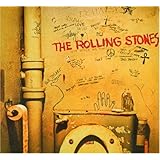
Dissing the Stones

Well, 50 years of the Rolling Stones does seem like an awful lot, even for Stones fans.

When the group first appeared, they were the flip side of all the neat and clipped British groups that, once you got past the need of a haircut, you could take home to mother. It wasn't just the Beatles. There were all these other groups like the Dave Clark Five and Gerry and the Pacemakers (not a reference to automated heartbeats) and Chad and Jeremy, and they all wore suits and they were all on the British Sound bandwagon, and it was all rather fun. Cute, in its way. But the Stones were not cute. Call them what you will, they never looked as if you could bring them home to mother, and more to the point, you couldn't bring home their music. They started out playing a rough R&B blend that matured into a unique Stones sound around the time of "Street Fighting Man" and they eventually started billing themselves as the World's Greatest Rock and Roll Band. They billed themselves as the World's Greatest Rock and Roll Band for long enough for all of them to become grandparents.

Stones fans, owning a clutch of amazing albums from a period of a few years beginning in the late 60s, have had to go through a lot of aging themselves, and if they've continued buying new Stones releases, a little bit of a disappointment. Let's face it. Real rock really is a young person's game. There's some good old rockers out there, don't get me wrong, but nobody starts out as an old rocker. And if you look at the Stones today, they actually look older than most. Time isn't kind to former junkies:

Their original appeal, as the New York Times pointed out in 1972, was as a scandalous symbol of "generational independence"; now that we baby-boomers are too rickety to do much dancing, the Stones serve as a precious relic of our teenage days. Encouraged by them, we can all grow old disgracefully.

Peter Conrad writes a review: The Rolling Stones: Fifty Years by Christopher Sandford, and he manages to dish enough dirt on one page to make that whole 50 years of Stones just fly by. The thing is, he sort of nails it. The music still stands, though, the old stuff that is. I meant it when I cited "Street Fighting Man": go back and listen to the original.

Rock and roll was never better. Can the Stones help it if it's not 1968 anymore?
.

Toward the understanding of the appeal of horses

Coming from a family where there is at least one rider—or maybe former rider, it's hard to say—horses have loomed a little larger for us than if they just happened to be grazing away as we drove by in a perfectly good automobile. Then again, as we edge into the Derby this weekend, we do admit a fondness for the Sport of Kings (although we regret that lately there are practices that are, to put it mildly, appalling at some less storied barns than the ones in Louisville). I fondly recall going out to Belmont a few times when the legendary Forego was racing, and watching this giant gelding come from behind—always from way behind—and win, and win, and win. Of course, people who ride, while admiring race horses, aren't that interested in them. Riders do events that are far removed from galloping around a track at top speed while the people in the stands pray that they'll win the Daily Double. They don't dislike racers; they just happen to be in a different business.

One thing you can say about riders that differentiates them from the rest of us is that they love horses. I have nothing against horses, but nothing particularly for them, either (unless they're running like Forego or winning me the Daily Double). I prefer cats. Cats are cuter than horses, for one thing, and can more easily fit on your lap. They also use a litter box, which means that they don't require any mucking of the stables. But horse people don't see it like that. Horse people look at horses and—Well, what is it that they see when they look at horses?

You are not vitally important to your horse, not really, not like you are to your dog, ever. They never figure out who you are, and why you do the silly things you do. You have to forge a relationship with your horse while knowing that, given the chance, they'd probably rather hang out with their buddies than spend time with you. But then, one day you pull up to the barn, and you realize that your horse has memorized the sound of your car, as opposed to other people's cars, and has wandered over to the gate to greet you.

Nicole Cliffe attempts to uncover the appeal of these animals that seem rather difficult to love. Unless, I guess, you already happen to love them. The article is The Horse, Explained.

Don't get us wrong, by the way. We have ridden the odd horse on occasion, and both we and the noble steeds between our legs have managed to survive the ordeal without too much permanent damage. But it takes more than riding them to understand them.

My cat, on the other hand, is perfectly content not to be ridden, and both of us are quite satisfied with the situation.

The Newsroom

Ten to one if you're reading this you're an Aaron Sorkin fan, and you're going to want to watch The Newsroom when it hits the airwaves. You already know it's coming, and you're just tapping your foot, waiting.

Here's a piece from Vanity Fair to tide you over. It includes the line, “I’m pretty wordy when I write,” Sorkin said.

Really?

Have at it: The Sorkin Way.

And a little bonus, an interview following The Social Network:

Got Klout?

You learn something new every day. Like there's such a thing as a Klout score. You have one whether you know it or not, and most likely, it's down in the basement somewhere. It's a measurement of how well you are known, collected using social media. You're a zero? Probably, unless you Tweet a lot, which will give you at least a couple of points. Justin Bieber is 100. Then again, he has 18 million Twitter followers. I can't even come up with 18 million people that aren't following me! And not only is your Klout a number floating in air (and a mighty suspect one at that), the higher your number is, the more likely you'll start actually acquiring benefits, like room upgrades at casinos and discounts at retail stores.

I gotta get my number up!

Throughout our lives, we are tagged with scores, some of them far more crucial to our well-being than anything [Klout CEO Joe] Fernandez has handed out. Credit scores are maddeningly opaque and can be used against us in infinitely more harmful ways than a Klout score ever could. Our health records are used by huge organizations to segment and sift us behind closed doors. And yet there is something uniquely infuriating about the Klout score. “They’re calculating a Q score for everybody, and it turns out there’s a lot of emotion tied up in that,” [Rutgers adjunct marketing professor Mark] Schaefer says. And the fact that Klout users’ status is so explicitly linked to material gain makes it an even more freighted situation, he says. “This is the intersection of self-loathing with brand opportunity.”

Seth Stevenson explains it all at Wired: What Your Klout Score Really Means. Great. Something else to worry about.
.